
Mel Bochner
The OG conceptual artist of words and language

Mel Bochner died a few weeks ago, and I’ve been wanting to put into words (pun intended) the lasting force of his work. Many artists use words in their work today, from Banksy to my personal favorite street artist Victoria Villasana, to Sage Barnes and Eric Stefanski. Even Ashley Longshore has numerous nods to Bochner in her mass-produced pop-art-style pieces. Countless artists use written language in their visual arts. But the first was Mel Bochner.
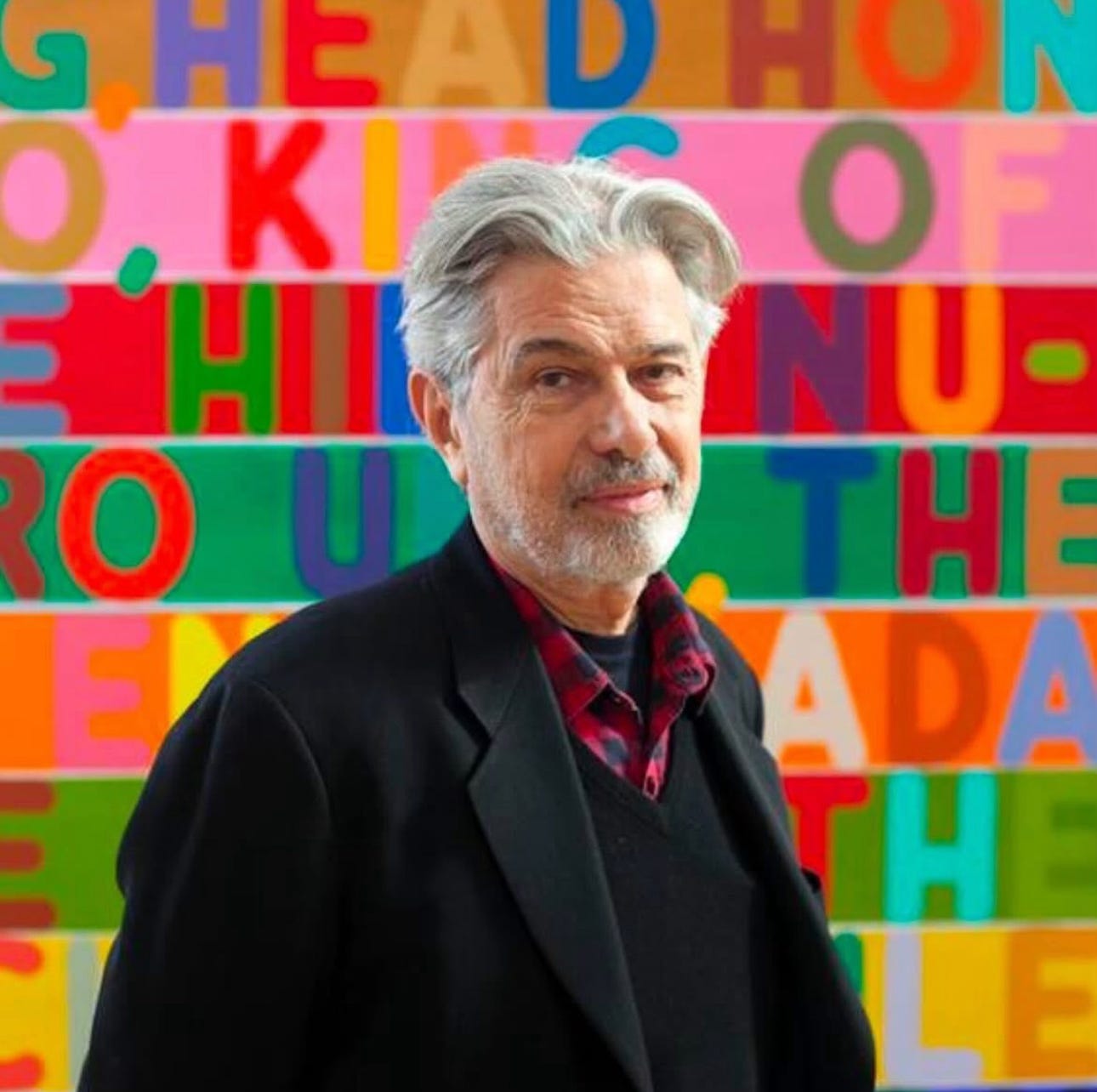
Bochner was one of the first artists that I really noticed as a kid. I saw an exhibit of his at a gallery in Rome when I was 10, and again in Boston the year I graduated college. I spent that year walking up and down Newbury Street, debating if I wanted to work in a gallery or try to get my work into a gallery, and I must have passed his exhibit at the Barbara Krakow Gallery—now the Krakow Witkin Gallery—50 times. (I did neither and started bartending at a spot in the last block of Newbury street instead, but that’s a separate story.) By 2003 the concept of framing words as art was no longer new, but he was still the father of the conceptual style and his work always had this gravity to it. You intuitively know the real thing when you see it.


Before I was an artist, I considered becoming a linguist. While writing, specifically, was never my passion, words were. The history of certain words, their origins, their differences across dialects of the same language. The way one’s voice—and sometimes entire personality—shifts when moving from one language to the next. The idea that different native tongues will raise our brains in entirely different ways of thought. These are all concepts I loved to think about having been a kid living in Paris, learning a new language that was filled with words that seemed the building blocks of my own mother tongue. I was seven when we moved there, but I could already sense that I was a slightly different person when I spoke French, and that person lives on to this day, whenever I have the occasion to speak it.
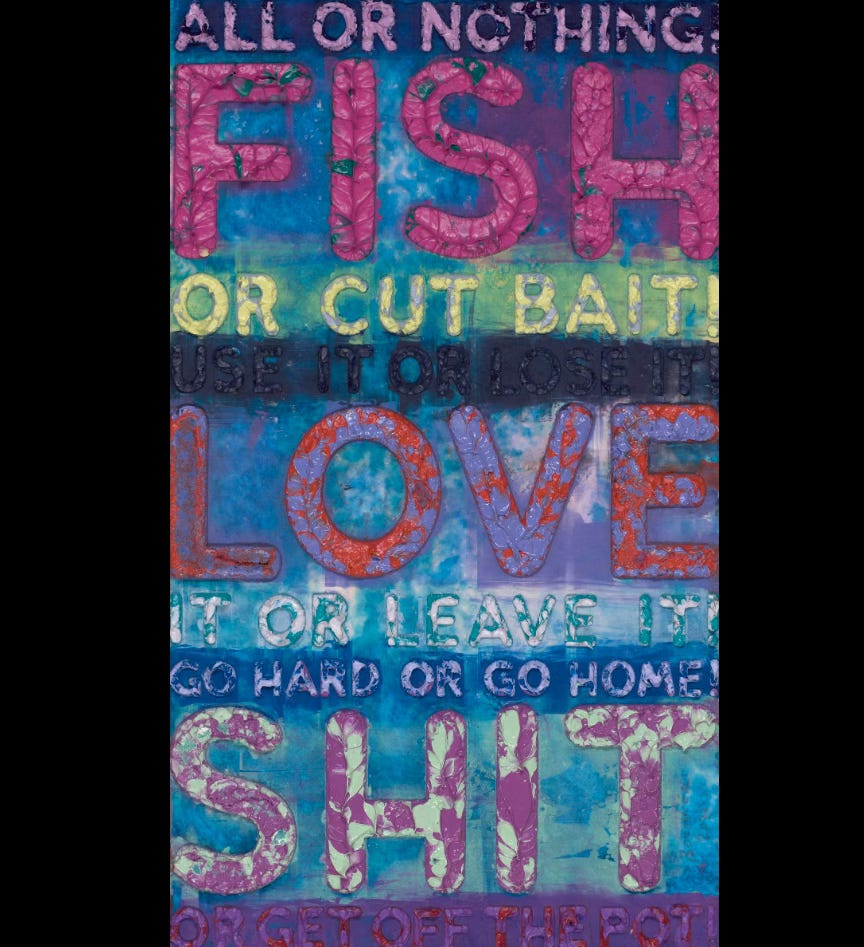
Mel Bochner was born in 1940 and Mel’s visual artwork was centered around the use of language—how language, words, and numbers are the key to life and power and art itself. He used words to force the viewer to interact with the art. He asked literal questions with his work, questions that wouldn’t go away. “Are you out of your fucking mind?” staring at you from the wall every day forces one to eventually consider the real question and answer. His stacks of platitudes, piling up words like “awesome”, “amazing”, “cool” to show us how silly and empty they could sound when thrown out and piled up together. The “Blah blah blah” to show how we often use words just to fill a space.


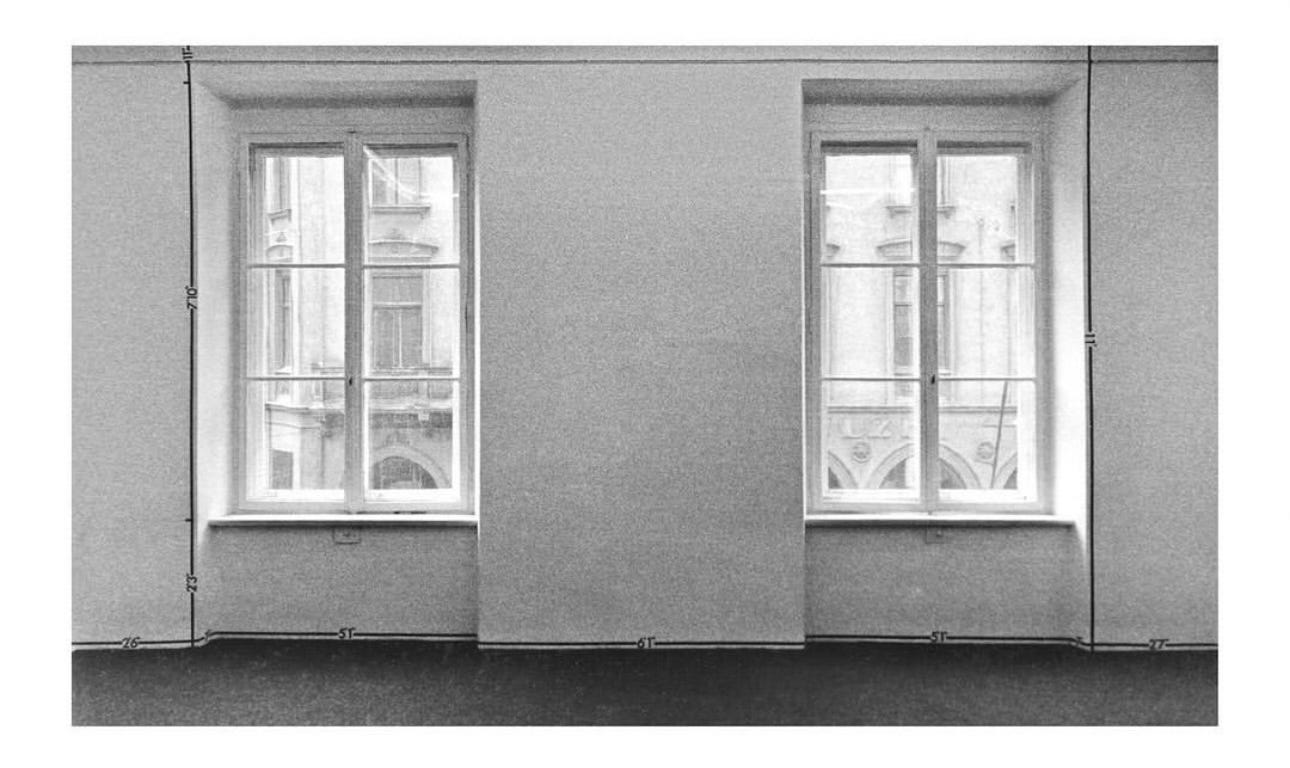
Bochner also used math and numerical characterizations, for example in a 1969 exhibit in Munich, he took a black marker and drew lines around the perimeter of the room with the numerical distance marked in the middle of each line. What this did was flip the focal point of the room into the center, onto the viewer. Whether working with letters or numbers, his interest was equally in the form they took, as it was in their meaning or value.
.
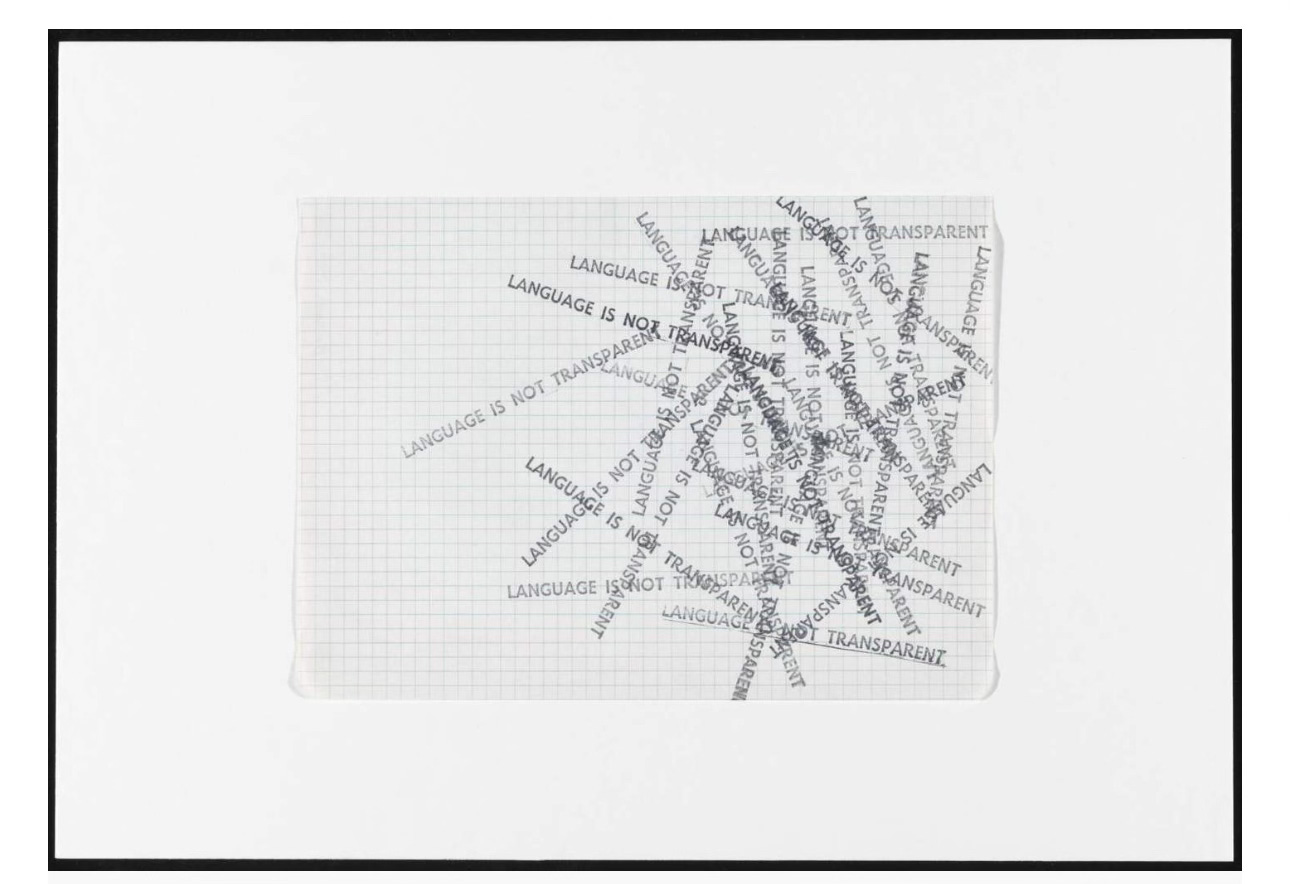
In his 1969 work “Language is Not Transparent” (held at the Tate Museum), Bochner arranged lines of the titular phrase haphazardly around a sheet of paper, like a collection of fallen matchsticks. The words themselves are of varying degrees of transparency. This was one of those pieces that lived on inside my head for years after I saw it, always thinking back over “what does it actually mean?” My opinion—which has changed a few times over the years—is that he was making a statement on the human tendency to not assign gravity to our words. We think that we throw words out into the air in front of us and they dissipate without any solid effects. But in Mel Bochner’s opinion, words held a weight, words were important, words were the building blocks of everything, including his art and life’s work. He used words in a way that challenges us to look and think further.
Of course many religious traditions including the Bible teach us the same thing. Words have weight. The concept of “casting a spell” comes from the understanding that our words hold power over our realities. Mel Bochner used the silent art of the painting to infuse our spaces with words, and questions. He called attention to the visual presence that words have. The written word is experienced both mentally and visually. Poetry shows us how the form that words take matters. How the words are spaced, how the lines are drawn, the font, these decisions impact the meaning. Mel Bochner took language and brought it into yet another dimension, making it colorful, concrete and solid. He made words into an art and made us all think in the process.

